
Everyone Wants to Save Local News. Almost No One Will Get the Chance.
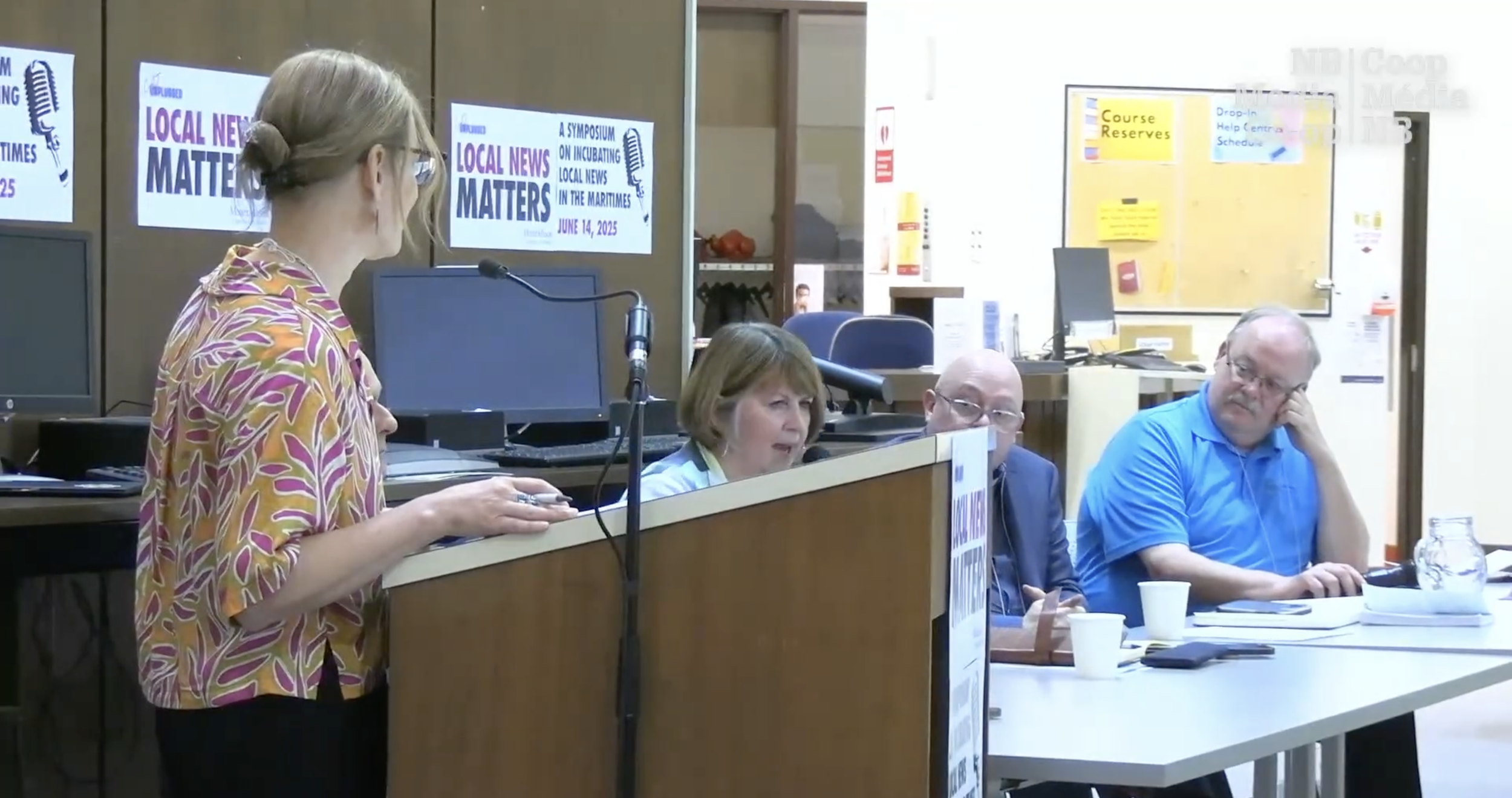
Ariel joins panels to explore these intersections at industry events and academic conferences.
Earlier this year I stopped talking about saving local news and tried to buy a small-town newspaper. The deal didn’t close. But the process taught me more about the real state of community journalism than any conference, report, or policy discussion I’ve attended.
Everyone in this industry knows the numbers. Since 2008, more than 600 local news outlets have closed in 388 communities across Canada, most of them community newspapers.
But statistics don’t tell you what it takes to buy one. They provide even less context for what it takes to move a legacy paper into a new era. The crisis in local journalism isn’t just about reporting. It’s about ownership, systems, and whether anyone can realistically inherit the institutions we say we want to save.
For more than twenty years I’ve worked on the business side of news publishing, focusing on revenue, partnerships, and audience growth at organizations including the Financial Times, the Telegraph, the Toronto Star and ZoomerMedia. In different ways, each of those roles involved the same challenge: trying to plug the industry’s leaking revenue.
Over time I came to believe the industry doesn’t need better patches. It needs to blow the roof off and rebuild the house. That belief comes from a simple conviction: local journalism is civic infrastructure. Communities are changing, and the way we produce and deliver news must evolve with them.
So when the opportunity arose in late 2025 to buy a community paper, I decided to try.
I had a clear vision. I wanted to modernize the editorial and business model at the same time—introducing research-led editorial practices, new content formats, and audience strategies that reflect how people actually consume information today.
I wanted to bring the growing movement of solutions journalism into the mix, examining how communities respond to problems rather than simply documenting crises.
I also wanted to rethink formats, so the paper worked for new audiences, new attention patterns, and increasingly neurodiverse information habits.
In short, I wanted to run a legacy newspaper using the best editorial and revenue practices available today. I had the experience. And I raised the capital to buy the business—even if the price tag was surprisingly high.
As you already know, it didn’t work. But trying revealed a few realities that rarely appear in industry conversations.
Lesson 1: Buying a Newspaper Is Not Like Buying a “Normal” Business
In theory the assets of a newspaper are obvious: the audience, advertiser relationships, distribution networks, and the archive. In practice, documenting those assets can be surprisingly difficult.
The paper I attempted to buy had no advertiser database. Subscriber records existed largely offline. There was no automated renewal system and very little digitized audience data. None of this is unusual.
Many community newspapers were built in an era when subscriptions were paid in cash, advertisers were long-time local businesses, and the publisher personally knew many readers. Modern publishing infrastructure—CRMs, subscription systems, and audience analytics—was never built because it wasn’t necessary.
For a new owner, rebuilding those systems becomes the first challenge. And it introduces a level of risk that almost never appears in conversations about “saving local news,” which tend to focus on launching new digital outlets rather than transitioning legacy media. In my case, it was the first point of friction with the existing owner. “If it ain’t broke, don’t fix it,” he told me. Banks, unfortunately, tend to see a system-less business as very broken.
Lesson 2: Journalists Are Not Actually Waiting for These Jobs
Another assumption I carried into the process was that hiring an experienced journalist would be straightforward.
The industry talks constantly about layoffs and shrinking newsrooms. I assumed there would be strong candidates willing to relocate to a small town for a stable reporting job.
I was prepared to offer a full-time role paying roughly $80,000 to $100,000 to lead the editorial operation. Finding someone willing to relocate proved far harder than expected.
Part of the challenge may lie in how the industry recruits. Journalism schools tend to draw students from major cities, and many graduates naturally return to those environments.
Rural reporting requires a different mindset.
The paper I was attempting to buy had spent years covering what might politely be called the “car crashes and fires” beat—accidents, police incidents, and emergencies.
It’s easy to dismiss that coverage as sensational. In reality, it serves a practical function in small communities. It informs readers quickly while avoiding the social tensions that investigative reporting can create in places where everyone knows everyone else. Oh, and it provides a killer front page (no pun intended).
Local journalism in smaller centres operates under very different pressures than large and national media. Sometimes the question isn’t whether something is true. It’s whether publishing it will tear the town apart.
A community news outlet will engage in accountability journalism but leans heavily toward a stewardship role—allowing the communities they serve to know themselves and their neighbours. They provide a disproportionate share of the social glue that breeds cohesion and empathy.
Based on my experience, the journalists best suited to this kind of work are not always the crusaders being trained for careers in major urban newsrooms, where the accountability function rules supreme.
Lesson 3: Print Isn’t Dead — But Change Is Hard
One of the most common claims about community newspapers is that print is finished. In many communities, that simply isn’t true. Older readers rely on print. Certain religious communities rely on it. Some rural areas still struggle with reliable broadband access. Turning off the presses overnight would exclude a significant portion of the audience.
At the same time, digital transformation is clearly necessary.
What surprised me was how difficult even small operational changes could be. Moving from cash subscriptions to automatic renewals was controversial. Building an advertiser database was controversial. Even discussing digital subscription models generated resistance.
Legacy community papers operate inside systems built decades ago, when print advertising was stable and renewal notices arrived by mail. Changing those systems requires more than technology. It requires cultural change.
Lesson 4: Policy Supports Journalism — Not Publishers
Canada has made serious efforts to support journalism. Programs now exist to fund reporters and coverage in underserved communities. But there is a gap in the policy conversation. Most programs support journalists and reporting. Very few support the modernization of legacy publishing businesses—the databases, subscription systems, and operational infrastructure required to make newspapers sustainable and saleable.
As a result, it is often easier to start a new digital outlet than to modernize an existing community paper, and it is often easier to fold a “new” community news outlet than to try to find a buyer when the owner needs to retire or step down.
The end result is trouble for our collective history, and this is especially true for small, remote, and rural communities.
Lesson 5: The Industry Is Older Than We Admit
Many community news practitioners are either retired or nearing retirement. New digital outlets are often launched by journalists returning to their communities later in their careers. These efforts often produce strong reporting and trusted local coverage. But they rarely build the operational systems, archives, or asset structures that allow those organizations to survive beyond their founders.
Meanwhile, many legacy outlets look like this:
Shrinking audiences.
Shrinking revenue.
Part-time staff nearing retirement.
That combination makes acquiring and modernizing a legacy paper extremely risky.
My Learning
Community newspapers are not just media companies. They are civic institutions.
Their archives often contain the only continuous record of community life—births, deaths, council debates, hockey championships, and school graduations. When a legacy newspaper disappears, a community doesn’t just lose journalism. It loses decades of local memory.
Trying—and failing—to buy a small-town newspaper left me with one overwhelming impression. Everyone agrees local journalism is essential. Almost no one has built systems that make it possible for someone new to run one.
If we want community journalism to survive, we need to start treating local news organizations as civic infrastructure. That means building systems that allow them to be transferred, modernized, and operated by a new generation of publishers. Without those systems, every conversation about “saving local news” risks becoming little more than nostalgia.
The paper I wanted to buy was ultimately purchased and continues to publish. I met with the new owner, who told me he plans to recover his investment within five years. What happens after that is anyone’s guess. In the meantime, the plan is simple: change as little as possible.